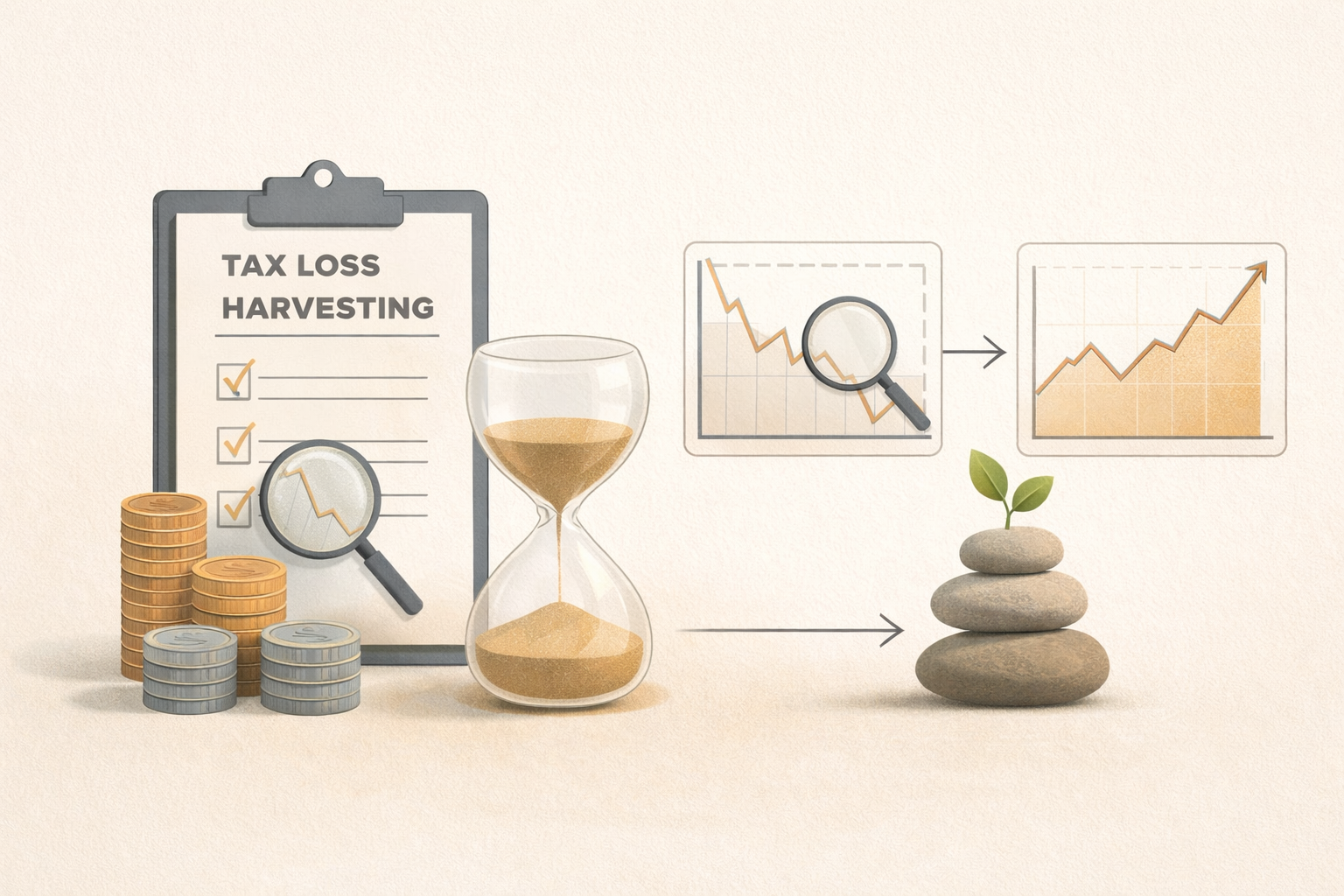

Tax Loss Harvesting Compliance for Advisers in Canada
This guide focuses on building a defensible, audit-ready tax loss harvesting (TLH) workflow for advisers. It is designed to support consistent delivery, clear disclosures, and robust recordkeeping-while keeping client portfolios aligned with their long-term strategy.
Compliance-First Workflow
1. Define Scope, Authority, and Client Consent
Clarify whether TLH is delivered as general education, implemented as part of agreed portfolio management, or executed under discretionary authority. Ensure client consent and scope are documented in engagement terms, IPS, or advice records.
2. Set Objective Rules and Controls
Use written thresholds and constraints (loss size, turnover limits, minimum holding period rules, liquidity constraints, and concentration limits). Rules reduce behavioural risk and make outcomes more consistent across clients.
3. Validate Suitability and Portfolio Integrity
Confirm that harvesting aligns with the client's risk profile, time horizon, and asset allocation targets. Tax decisions should not override diversification, liquidity needs, or mandate constraints.
4. Manage Repurchase Constraints and Replacement Selection
In Canada, superficial loss rules can deny a loss where the same or identical property is repurchased within a defined window and is still held afterwards. Replacement exposure design and household/account coordination are common controls.
Operational controls commonly include: (a) replacement "allowed list" rules, (b) household/account coordination checks, and (c) a documented rationale for why the replacement preserves the intended exposure.
5. Apply Lot-Level Selection and Trade Documentation
Use lot-level selection to prioritise losses while avoiding unnecessary gains. Record the lots selected, cost bases, holding periods, and expected tax impact. This is essential for auditability and client communications.
6. Disclosures and Client Communication
Make clear that TLH is not a guarantee of tax savings and that outcomes depend on the client's circumstances and applicable rules. Disclose key risks: tracking error, transaction costs, denied losses due to repurchase constraints, and potential future tax impacts.
7. Recordkeeping, Supervisory Review, and Audit Trail
Maintain an audit trail that links each TLH action to: client mandate, rule triggers, suitability checks, replacement selection logic, and client communications. For advisory firms, periodic supervisory review helps ensure consistency and reduces process drift.
Country-Specific Compliance Notes for Canada
Advisers may need to consider how superficial loss rules interact with repurchases across accounts and household members. Document replacement selection and controls designed to avoid denied losses.
Practical Adviser Checklist
- Written TLH rules (thresholds, constraints, replacement logic)
- Client scope and consent captured in advice records
- Repurchase constraint controls and household/account coordination
- Lot-level selection documentation and trade rationale
- Clear client disclosures and post-trade reporting
- Centralised recordkeeping and periodic supervisory review
Final Thoughts
A compliance-first TLH process protects clients and advisers. Done well, it strengthens trust: the method is consistent, the rationale is clear, and the documentation is audit-ready.