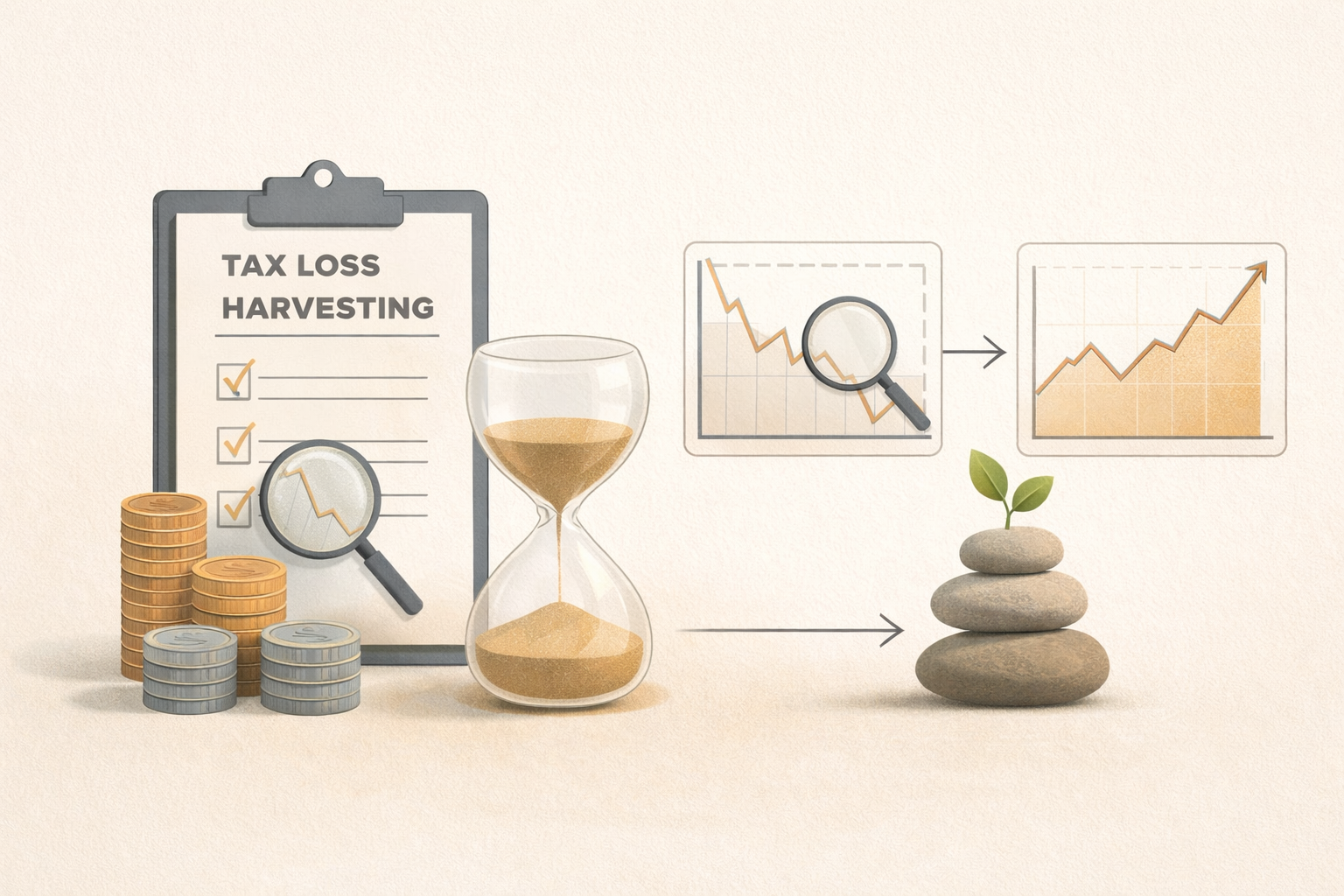

Why Best Practices Matter in Tax Loss Harvesting
Tax loss harvesting is most effective when applied as a repeatable, rules-based process that balances tax outcomes with long-term investment discipline. Best practices help advisers and investors avoid overtrading, manage constraints, and maintain portfolio integrity.
Tax Loss Harvesting Best Practices
1. Start by Understanding Realised Gains
Before harvesting losses, calculate how much capital gain has already been realised during the tax year and whether losses can be used now or carried forward under local rules.
2. Use Meaningful Loss Thresholds
Define minimum thresholds-based on percentage decline, dollar value, or volatility-to focus on losses likely to deliver meaningful after-tax value after costs.
3. Maintain Portfolio Exposure with Highly Correlated Assets
Reinvest proceeds into highly correlated-but not identical-exposures to preserve diversification and factor exposure while minimising tracking error.
4. Manage Wash Sale and Repurchase Constraints Proactively
Hong Kong generally does not tax capital gains for individuals, but profits can be taxable if activity is considered trading/business income. Confirm client facts and cross-border tax exposure before applying TLH.
5. Avoid Short-Term Gain Traps
Switching back too quickly can generate short-term gains that offset the harvested loss. Evaluate re-entry based on expected after-tax impact, not fixed timelines.
6. Apply Lot-Level Thinking
Each purchase creates a tax lot with its own cost base and holding period. Use lot-level selection to prioritise the realisation of losses while avoiding unnecessary gains.
7. Use Timing Signals and Real-Time Monitoring
Volatility creates opportunities. Many advisers use monitoring and alerts to identify when losses cross thresholds so opportunities are captured consistently rather than reactively.
8. Document Every Decision
Record the rationale for each harvest, replacement selection, and expected impact. Documentation supports repeatability, client communication, and defensibility.
Country-Specific Considerations for Hong Kong
For many Hong Kong-based individuals, capital gains are generally not taxed, but trading income can be taxable. For cross-border clients, confirm tax residency and where gains/losses are recognised.
Final Thoughts
Best-practice TLH improves the odds that tax actions enhance-not disrupt-long-term strategy. Use this framework as education and validate implementation with qualified professionals.