
Summary
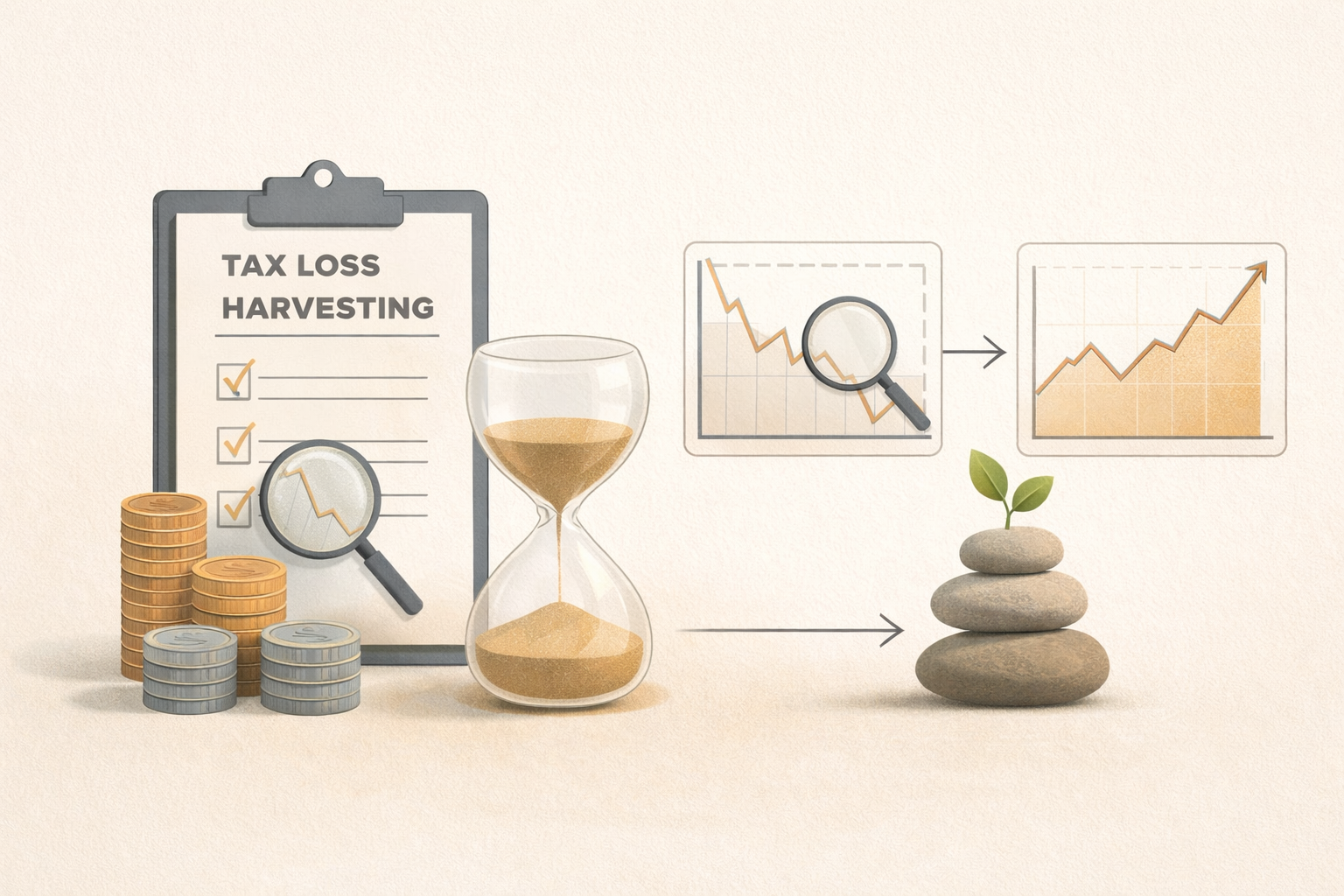
Tax loss harvesting is a tax-aware investing strategy that involves selling investments at a loss to help offset capital gains and potentially reduce the amount of tax owed. Rather than focusing on market timing, tax loss harvesting is typically applied as a systematic, rules-based process that helps investors improve after-tax outcomes while keeping portfolios aligned with long-term goals.
What Is Tax Loss Harvesting?
Tax loss harvesting is the process of realising capital losses by selling investments that are trading below their purchase price, so those losses can be used to offset realised capital gains. In many systems, realised losses can reduce current-year taxable gains and, in some cases, be carried forward to future years.
How Tax Loss Harvesting Works (Step by Step)
1. Calculate Realised Capital Gains
Start by calculating how much capital gain has already been realised during the tax year. This helps determine whether TLH is likely to be valuable and how much loss may be useful to offset existing gains.
2. Identify Unrealised Losses
Review the portfolio to find positions trading below cost base. Many investors use thresholds (for example, loss above a percentage or above a R$ amount) to avoid low-impact trades.
3. Confirm the Investment Rationale
Before selling, confirm whether the position still fits the portfolio strategy. TLH is most defensible when the sale aligns with rebalancing, risk management, or replacing a holding that no longer fits.
4. Manage Wash Sale and Repurchase Constraints
In Brazil, tax treatment can vary by asset type and client profile. Confirm how losses are recognised for the instrument and keep a clear rationale for any replacement trade.
5. Sell the Investment to Realise the Loss
Once sold, the loss becomes realised and may be applied against realised capital gains, subject to local tax rules.
6. Reinvest to Maintain Market Exposure
To avoid being out of the market, investors often reinvest the proceeds into a similar (but not identical) investment. This helps maintain diversification and expected exposure while managing compliance and tracking error.
7. Track and Document the Transaction
Good recordkeeping is essential. Track trade dates, cost bases, replacement exposures, and the investment rationale for the trade.
Country-Specific Considerations for Brazil
Brazil's treatment can vary by asset type and investor circumstances. Confirm recognition rules and keep robust records of cost bases, sales, and replacements.
A Simple Example
Imagine an investor who has already realised capital gains during the year:
- Realised capital gains: R$20.000
- Unrealised loss on an investment: R$6.000
By selling the investment and realising the R$6.000 loss, the investor may reduce taxable gains from R$20.000 to R$14.000, depending on applicable rules. The investor then reinvests the proceeds into a similar exposure to remain invested.
Common Risks to Watch
- Overtrading: costs and complexity can erode outcomes.
- Compliance constraints: repurchase restrictions or anti-avoidance principles may affect results.
- Tracking error: replacements may not match the original exposure perfectly.
- Tax-first decisions: selling purely for tax reasons can harm long-term strategy.
Final Thoughts
TLH works best as a disciplined process integrated with portfolio management. Because tax treatment varies, use this as an educational framework and confirm decisions with qualified professionals.